
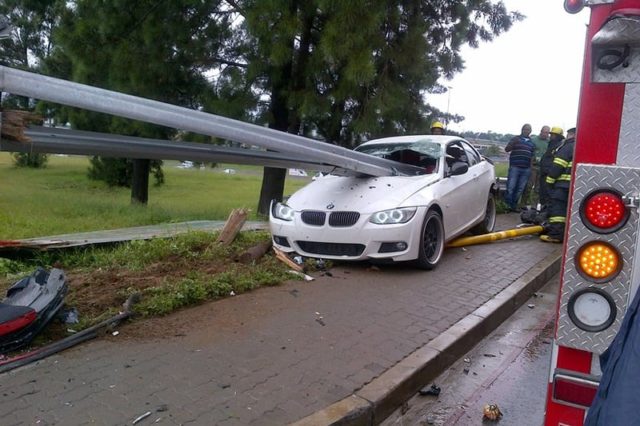
The National Financial Ombud Scheme has warned motorists that their insurers will refuse to pay out their claims if they’re involved in an accident while under the influence of alcohol.
This is regardless of whether motorists are breathalysed or have their blood tested at the scene, as insurers use various techniques to determine if a motorist had been drinking before an incident.
Speaking to SAfm, National Financial Ombud Scheme head Reana Steyn warned that just being under the influence of alcohol is enough to reject a claim, even if a motorist is under the legal limit.
“In the contract that you’ve signed and that you’ve agreed to, you’ve agreed to certain things as the insured,” she said.
One of the agreements is that the insured won’t drive under the influence of alcohol, and she clarified that this doesn’t only apply to insured parties driving over the legal blood alcohol limit.
“It’s not only exceeding the limit, but it’s also just a general statement under the influence, and that’s what you’ve agreed to,” said Steyn.
“If you drive under the influence, you will not be paid for your claim.”
Moreover, she added that this could also apply to motorists involved in accidents where their blood alcohol levels were never tested at the scene.
“They will look at the totality of all the evidence. That is where the evidence of tow truck drivers, or paramedics and other witnesses at the scene will come into play,” said Steyn.
“The insurance company will gather information as to your whereabouts. They will investigate where you were, what you were doing, to try and see: were you under the influence?”
She explained that this is because insured parties frequently lie to their insurers, shifting the responsibility onto the insurer to prove what really happened.
This can include the insurer investigating the insured’s bank statements to determine where they were and what they were doing before an incident.
Cracking down on drunk driving in South Africa’s richest city
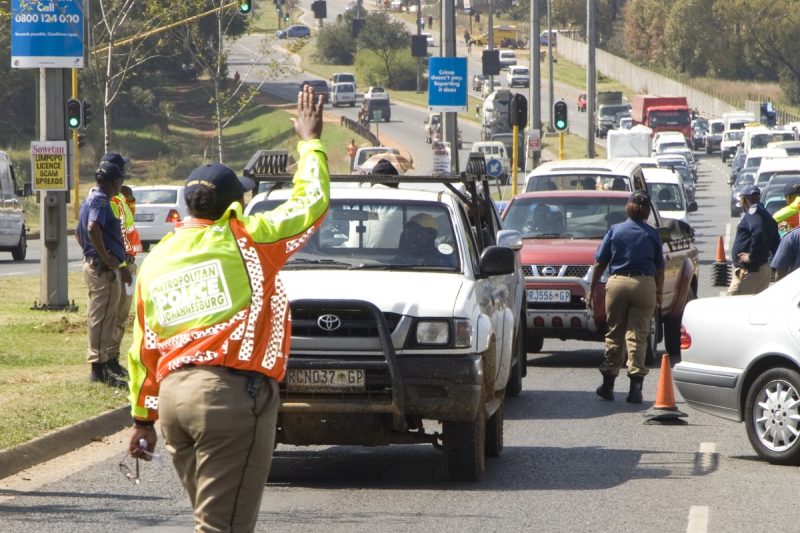
Motorists driving under the influence have been a major contributor to road fatalities in South Africa, particularly over the festive season.
Transport minister Barbara Creecy alluded to this while announcing the road fatality statistics for the 2024/25 festive season.
“I think part of what has surprised us is that these drivers have been extremely under the influence of alcohol both day and night,” she said.
Major metros, particularly Johannesburg, increased the frequency of traffic stops during the 2025/26 financial year to try to crack down on the trend of drunk driving.
In November 2025, the Johannesburg Metropolitan Police Department (JMPD) told MyBroadband that it had aligned with the national “Safer Festive Season Campaign”.
To tackle driving under the influence (DUI), the JMPD said it planned to set up sobriety checkpoints across the metro’s major arterial and suburban routes.
“DUI arrests remain a core metric of our enforcement success in preventing road carnage,” it said.
The JMPD’s efforts also focused on nailing motorists guilty of speeding and other infringements through a combination of speed traps and multi-disciplinary roadblocks over the festive season.
“JMPD will implement a high-density, integrated operational plan across all regions of Johannesburg, focusing heavily on visible policing, especially during peak travel times and high-risk periods,” it said.
“The JMPD plans to significantly increase the frequency and duration of multi-disciplinary roadblocks.”
The JMPD stated that its roadblocks, or vehicle checkpoints, will be conducted in collaboration with the Road Traffic Management Corporation, the Gauteng Traffic Police, and the South African Police Service.
“Roadblocks will be strategically positioned on key national routes (N1, N3, N12, M1) and central urban arteries to ensure maximum impact on both compliance and crime prevention,” the JMPD said.
“The presence of these roadblocks will serve as a strong deterrent to crime and irresponsible road behaviour.”
It added that it planned to tackle speeding and reckless driving with fixed-point and mobile speed traps and that it adjusted its deployment schedule to ensure 24/7 enforcement on high-volume routes.
“This includes dedicated units focused on manned speed enforcement to immediately address and process drivers caught for excessive speeds,” the JMPD said.